Discover the History, Craftsmanship, and Irresistible Magic Behind Lisbon’s World-Famous Custard Tarts and Sweet Traditions
There is a distinct sensory moment that defines arriving in Portugal. It is not just the salt-kissed Atlantic breeze, the golden limestone of historic facades, or the distant strains of Fado echoing through a cobbled alleyway. It is the warm, inviting aroma of caramelized sugar, buttery laminated pastry, and freshly baked custard drifting out from a local pastelaria.
For centuries, Portugal has quietly held a reputation as one of Europe’s greatest culinary destinations, and nowhere is this more evident than in its legendary baking traditions. At FlyOver Travel, we believe that true luxury travel is deeply rooted in local culture. Exploring a destination isn’t just about seeing its monuments or staying in five-star hotels; it’s about tasting its heritage.
Join us as we take you on a delicious journey through the world of authentic Portuguese pastry, uncovering the history, the craftsmanship, and the insider secrets behind the world’s most coveted sweets.
The Crown Jewel: The True Story of the Pastel de Nata
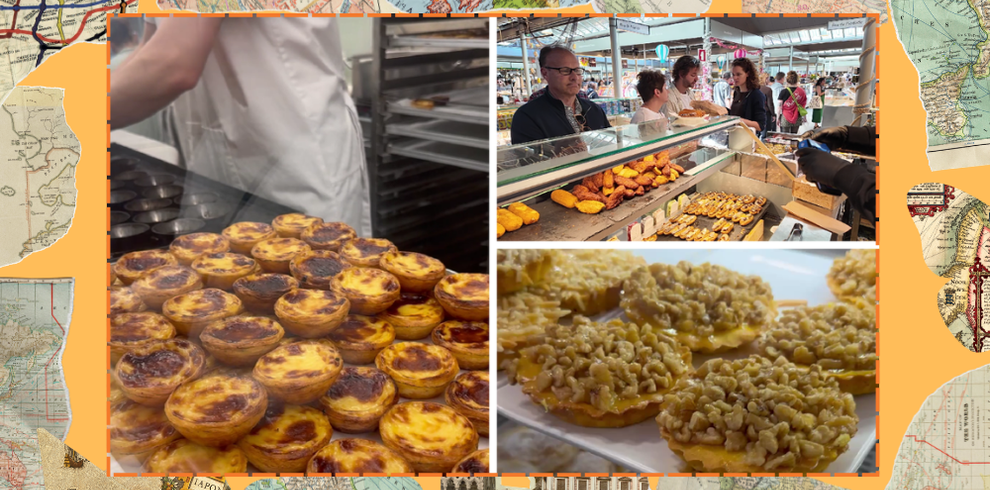
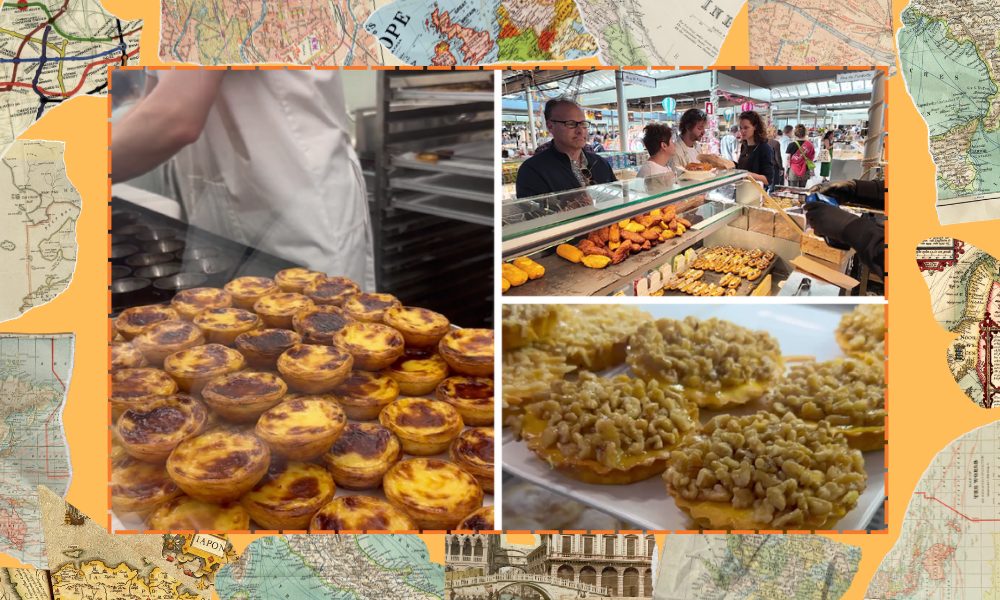
You cannot discuss Portuguese pastry without bowing before the undisputed monarch of the bakery counter: the Pastel de Nata (Portuguese custard tart).
To the untrained eye, it is simply a small tart. But to the culinary connoisseur, it is a masterpiece of texture and temperature. The magic lies in the contrast: a blistered, caramelized top that hints at open-flame baking, a rich, velvety custard center that is sweet without being cloying, and a crust of thousands of delicate, shattering layers of puff pastry.
A Secret Born in a Monastery
Like many of Portugal’s greatest culinary treasures, the pastel de nata has divine origins. In the 18th century, monks and nuns in Lisbon’s magnificent Jerónimos Monastery used large quantities of egg whites to starch their religious habits. Left with mountains of leftover egg yolks, the resourceful clerics began experimenting with baking, ultimately creating a rich custard pastry.
Following the dissolution of the monasteries in 1834, the secret recipe was sold to a local sugar refinery, which eventually opened the historic Pastéis de Belém bakery in 1837. To this day, people line up daily outside the original Belém ovens—just steps from the monastery where it all began—to taste tarts served warm, dusted with cinnamon and powdered sugar.
Beyond the Custard Tart: A Nation of Master Bakers
While the pastel de nata receives global acclaim, Portugal’s pastry landscape is remarkably diverse, deeply regional, and steeped in centuries of history. Every region of the country guards its own sweet secrets, often tied to former convents and royal courts.
1. Ovos Moles de Aveiro
Hailing from the coastal city of Aveiro, this delicacy consists of rich, sweet egg yolk paste encased in a delicate, communion-style wafer molded into shapes celebrating the sea—fish, shells, and barrels. It is a stunning example of traditional convent sweets (doçaria conventual).
2. Pastéis de Tentúgal
Created by Carmelite nuns in the town of Tentúgal, these pastries are a marvel of pastry engineering. The dough is stretched by hand over large tables until it is as thin as tissue paper, then buttered, layered, folded around a sweet egg-thread filling (fios de ovos), and baked until golden and shatteringly crisp.
3. Traje de Sintra and Local Delights
When exploring the fairytale palaces of Sintra, visiting a local pastry shop to try queijadas (sweet cheese and cinnamon tarts) or travesseiros (“pillows” of puff pastry filled with almond cream) is an absolute mandatory ritual for the discerning traveler.
The FlyOver Travel Philosophy: Experiencing Culture Hands-On
At FlyOver Travel, we specialize in curating “friction-free” luxury itineraries that move beyond passive sightseeing. We believe that when you travel to Portugal, you shouldn’t just eat a pastry at a counter—you should understand how it is made.
That is why our bespoke itineraries frequently feature private pastry masterclasses.
Imagine stepping into a historic Lisbon kitchen alongside a master pastry chef. You learn the precise science of laminating butter into dough to create those iconic hundred layers. You master the whisking of the custard to achieve that perfect, silk-like consistency. And, best of all, you pull your own batch of hot, bubbling pastéis de nata straight out of a high-temperature oven, dusting them with cinnamon and savoring them with a freshly brewed espresso.
It is an immersive, sensory-rich experience that transforms a simple snack into a profound cultural memory you can recreate in your own home for years to come.
Pairing Your Pastries: The Sweet Life in Portugal
In Portugal, enjoying a pastry is never a hurried affair; it is an institution. It is a moment to pause, sit at a sunlit sidewalk café, and watch the world go by.
Whether paired with a robust bica (traditional Portuguese espresso) in the morning or a glass of aged Tawny Port in the evening, these sweets represent the warmth, hospitality, and unhurried elegance of Iberian life. When we design your Portuguese adventure, we ensure your days are paced to allow for these leisurely cafe moments—because true luxury is having the time to enjoy the simple pleasures.
Start Your Sweet Portuguese Journey
The golden bakeries, the historic monasteries, and the warm, powdered-sugar-dusted streets of Portugal are waiting for you. Let FlyOver Travel handle the intricate logistics while you immerse yourself in the rich culinary heritage of this magnificent country.
Are you ready to see the historic bakeries, master pastry chefs, and mouthwatering delicacies of Portugal in action?
Frequently Asked Questions About Portuguese Pastry
1. What is the difference between a pastel de nata and a pastel de Belém?
While both are egg custard tarts, a Pastel de Belém is the specific trademarked name given to the tarts produced exclusively by the historic Pastéis de Belém bakery in Lisbon, using the original secret 1837 recipe from the Jerónimos Monastery. All other versions baked across Portugal and the world are generally referred to as pastéis de nata.
2. What is the traditional way to eat a pastel de nata in Portugal?
A pastel de nata is traditionally eaten warm, straight from the oven. Before taking your first bite, it is customary to sprinkle a light dusting of ground cinnamon and/or powdered sugar directly onto the caramelized custard surface.
3. Why do so many traditional Portuguese pastries use egg yolks?
During the 18th and 19th centuries, large quantities of egg whites were used in convents and monasteries for ironing religious garments and clarifying wine. Left with surplus egg yolks, the nuns and monks incorporated them into sugar and flour, giving rise to Portugal’s famous tradition of convent sweets (doçaria conventual).
4. Can I learn to make authentic Portuguese pastries during a trip to Portugal?
Yes! Through bespoke travel planners like FlyOver Travel, you can arrange private, hands-on pastry masterclasses with professional local chefs in Lisbon or Porto, where you will learn the secrets of dough lamination and custard making from scratch.